Wednesday, 10 February 2021

Thinking Activity:Hard Times

Hard Times


Hard Times: For These Times (commonly known as Hard Times) is the tenth novel by Charles Dickens, first published in 1854. The book surveys English society and satirises the social and economic conditions of the era.


Education


Dickens uses many techniques throughout the novel to show his views on education to his readers, the first of which is to create different characters, some of which contrast each other in different ways . Two of such Characters are Sissy Jupe and Bitzer. They differ in the ways they have been taught and the ways they see the education system.


Bitzer is a model student, he has always strictly followed the system and been taught exactly how the system requires him to be taught. He is shown as lifeless and colourless. When asked, Bitzer describes a Horse as a ‘Quadruped’ and ‘graminivorous’ and gives endless facts about the animal. Although this description is very factual and impressive, the use of long complex words and the amount of facts show that he has simply been taught these facts, and probably has never even seen a Horse. Sissy on the other hand does not understand how to factually define a Horse when asked, this is because she has been brought up with Horses all her life and they are too familiar and important to her just to be described in facts. This is one way that Dickens tries to show to his audience that this type of education is wrong, the teaching of bare facts limits the imagination of the student and a more practical way of teaching, like Sissy has had, would help the children understand the facts that they are being taught, instead of just learning them.


Dickens also shows the characters of some of the staff at the school to make his views known. Mr Gradgrind is the first to be introduced and Dickens portrays him as ‘squared’ , both in his appearance and character, he reveals little about him apart from the fact he is rigid, and has little individuality. Mr Gradgrind believes in teaching facts and ‘facts alone’. Mr Gradgrind is a very stubborn and self-proud  man with. He addresses Sissy as ‘girl number twenty’. He gives no individuality to the students, and as with the teachers, Mr Gradgrind sees the students to have no personality and are all the same.


Dickens creates the name ‘ M’Choakumchild which alone seems to pose a threat to the children.


Dickens also uses a long list of complicated subjects like ‘Orthography, etymology, syntax and prosody, to satirise the education system and show that it is ridiculous to teach young children such things. In effect Dickens says that the teachers had been over taught and maybe if M’ Choakumchild had ‘learnt a little less, how infinitely better he might have taught much more!’ This is saying that if there was slightly less room for facts in his brain there would be more room for thought.

Gradgrind’s children, Thomas and Louisa, demonstrate Dickens views best of all, as they are the ones that are being effected by the education system. As far as education goes Thomas and Louisa are deemed to have the best, as their father is a very knowledgeable man. They have a ‘model house’ and they are seen as ‘model children’. But still they are not complete, Dickens suggests to the reader that the children lack imagination and fun.


Dickens believes that children should be taught to use their imagination and to think for themselves as well as being taught facts. He also believes that the attitude from the education staff towards learning is wrong, they believe that to be the perfect student is to know a great deal of facts, and to think for themselves is not an issue; but Dickens does not believe this.


Marriage


There are many unhappy marriages in Hard Times and none of them are resolved happily by the end. Mr. Gradgrind's marriage to his feeble, complaining wife is not exactly a source of misery for either of them, but neither are they or their children happy. The Gradgrind family is not a loving or affectionate one. The main unhappy marriage showcased by the novel is between Louisa Gradgrind and Mr. Bounderby. Louisa marries him not out of love but out of a sense of duty to her brother, Tom, the only person in the world she loves and who wheedles her into saying "yes" because he works for Bounderby and wants to improve his chances at rising in the world. Bounderby's intentions regarding Louisa seem a bit creepy at first, but he turns out to mean no harm to her (except that he deprives her of any marital affection). The only solution to this bad marriage, once Louisa has escaped the hands of Jem Harthouse, is for Louisa to live at home the rest of her days. She will never be happy with another man or have the joy of children, though Dickens hints she will find joy in playing with Sissy's future children.


Stephen Blackpool, too, is damned to unhappiness in this life as a result of his marriage. The girl who seemed so sweet when he married her many years ago becomes, by a gradual process, a depraved drunk who is the misery of his life. She periodically returns to Coketown to haunt Stephen and is, as he sees it, the sole barrier to the happiness he might have had in marrying Rachael. Mrs. Sparsit (an elderly lady who lives with Mr. Bounderby for some time) was also unhappily married, which is how she came to be Mr. Bounderby's companion before he marries Louisa.


Industrialism


The industrial revolution was an era of mechanization. During this era, in 1854, Charles Dickens (1812-1870) wrote Hard Times to comment upon the change within society and its effect on its people. Dickens points out the flaws and limitations of this new society in his eloquent and passionate plea on behalf of the working poor The novel shows presents to readers the authors perspective of life during the nineteenth century and makes comments on the central theme of fact versus fancy. Due to this theme, the novel ends with many characters realising that a person needs more than just fact in their life.


This shows that, even though Tom has been provided with what was believed to be the finest education, ad has learnt every Ology, he is still extremely selfish and uses people to his own will and benefit. Tom has turned out to be a very corrupt man and, being a product of the utilitarian system, Dickens uses Tom to declare that this system does not work.


Dickens portrays the idea that the utilitarian system has drained all the goodness of human nature through the symbolic description of Sissy and Bitzer within Hard Times. For example, when Sissy and Bitzer are introduced to the reader, it is evident through the symbolism used that Dickens favours Sissy, of the lower class.

Words:1167


Tuesday, 9 February 2021

Thinking Activity:Jude the Obscure

Jude the Obscure


Jude the Obscure is a novel by Thomas Hardy, which began as a magazine serial in December 1894 and was first published in book form in 1895. It is Hardy's last completed novel. Its protagonist, Jude Fawley, is a working class young man, a stonemason, who dreams of becoming a scholar. The other main character is his cousin, Sue Bridehead, who is also his central love interest. The novel is concerned in particular with issues of class, education, religion, morality and marriage.


 Jude Fawley


The novel’s protagonist, a poor orphan who is raised by his great aunt after his parents divorced and died. Jude dreams of attending the university at Christminister, but he fails to be accepted because of his working class background. He is a skilled stonemason and a kindly soul who cannot hurt any living thing. Jude’s “fatal flaw” is his weakness regarding alcohol and women, and he allows his marriage to Arebella even though it is unhappy, to distract himself from his dream. He shares a deep connection with his cousin Sue, but their relationship is doomed by their earlier marriages, society’s disapproval, and bad luck. Jude starts out pious and religious, but by the end of his life he has grown agnostic and bitter.


Jude is obscure in that he comes from uncertain origins, struggles largely unnoticed to realize his aspirations, and dies without having made any mark on the world. He is also obscure in the sense of being ambiguous: he is divided internally, and the conflicts range all the way from that between sexual desire and knowledge to that between two different views of the world. Jude is, therefore, struggling both with the world and with himself.

He is not well equipped to win. Though he is intelligent enough and determined, he tries to force his way to the knowledge he wants. Though well-intentioned and goodhearted, he often acts impulsively on the basis of too little objective evidence. Though he is unable to hurt an animal or another human being, he shows very little concern for himself and his own survival, often needlessly sacrificing his own good. He never learns, as Phillotson finally does perhaps too late, to calculate how to get what he wants. In short, he is more human than divine, as Hardy points out.

He is obsessed with ideals. Very early he makes Christminster into an ideal of the intellectual life, and his admitted failure there does not dim the luster with which it shines in his imagination to the very end of his life. He searches for the ideal woman who will be both lover and companion, and though he finds passion without intellectual interests in Arabella and wide interests but frigidity in Sue he maintains the latter as his ideal to his deathbed. Recognizing the Christminster holiday just before he dies, Jude says, "And I here. And Sue defiled!"

Jude is reconciled to his fate before he dies only in the sense that he recognizes what it is. In a conversation with Mrs. Edlin he says that perhaps he and Sue were ahead of their time in the way they wanted to live. He does not regret the struggle he has made-, at the least, as he lies ill he tries to puzzle out the meaning of his life. At the very end, however, like Job he wonders why he was born. But then so perhaps does every man, Hardy seems to imply.


Sue Bridehead


The novel’s other protagonist and Jude’s cousin. Sue’s parents were divorced and she was raised in London and christminster. She is an extremely intelligent woman who rejects Christianity and flirts with paganism, despite working as a religious artist and then teacher. Sue is often described as “ethereal” and “bodiless” and she generally lacks sexual passion, especially compared to Jude. Sue marries Philloston as a kind of rebuke to Jude for his own marriage to Arabella, and is then repulsed by Phillotson as a husband. She is portrayed as inconsistent and emotional, often changing her mind abruptly, but she develops a strong relationship and love with Jude. Though she starts out nonreligious, the death of her children drives Sue to a harsh, legalistic version of Christianity as she believes she is being punished for her earlier rebellion against Christianity, and she returns to Phillotson even though she never ceases to love Jude.


It is easy for the modern reader to dislike Sue, even, as D. H. Lawrence did, to make her into the villain of the book. (Lawrence thought Sue represented everything that was wrong with modern women.) Jude, as well as Hardy, obviously sees her as charming, lively, intelligent, interesting, and attractive in the way that an adolescent girl is. But it is impossible not to see other sides to her personality: she is self-centered, wanting more than she is willing to give; she is intelligent but her knowledge is fashionable and her use of it is shallow; she is outspoken but afraid to suit her actions to her words; she wants to love and be loved but is morbidly afraid of her emotions and desires.

In short, she is something less than the ideal Jude sees in her; like him she is human. She is also a nineteenth-century woman who has given herself more freedom than she knows how to handle. She wants to believe that she is free to establish a new sort of relationship to men, even as she demands freedom to examine new ideas. But at the end she finds herself in the role of sinner performing penance for her misconduct. As Jude says, they were perhaps ahead of their time.

If she is not an ideal, she is the means by which J tide encounters a different view of life, one which he comes to adopt even as she flees from it. She is also one of the means by which Jude's hopes are frustrated and he is made to undergo suffering and defeat. But it is a frustration which he invites or which is given him by a power neither he nor Sue understands or seems to control.


Monday, 8 February 2021

Thinking Activity:Robert Browning as a Poet


Robert Browning as a Poet


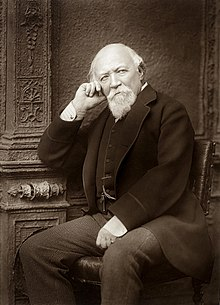
Robert Browning (1812 –1889) was an English poet and playwright whose mastery of dramatic verse, especially dramatic monologues, made him one of the foremost Victorian poets. Browning was famous for his dramatic monologues and commentary on social institutions. He was married to Victorian poet Elizabeth Barrett Browning.  He was a true observer of the Renaissance period and he admired it. The Renaissance saw a major shift in theories of art. As “Fra Lippo Lippi” discusses, a new realism, based on observation and detail, was coming to be valued, while traditional, more abstract and more didactic forms of art were losing favor. This shifting in priorities is analogous to the shifting views on art and morality in Browning’s time. The Renaissance, like the Victorian era, was also a time of increasing secularism (see “The Bishop Orders His Tomb”) and concentration of wealth and power (“My Last Duchess”. All of these aspects make the Renaissance and the Victorian era rather similar. By talking about the Renaissance, Browning can make his cultural criticism somewhat less biting. He also gains access to a wealth of sensuous detail and historical reference, which he can then use to add vibrancy to his verse. The historical connection, furthermore, lets him talk about his place in the literary tradition: if we still appreciate Renaissance art, hopefully future generations will still appreciate Browning’s poetry.


 I also want to say that Browning aspires to redefine the aesthetic. The rough language of his poems often matches the personalities of his speakers. Browning uses colloquialisms, inarticulate sounds (like “Grr”), and rough meter to portray inner conflict and to show characters living in the real world. In his earlier poems this kind of speech often accompanies patterned rhyme schemes; “My Last Duchess,” for example, uses rhymed couplets. The disjunction between form and content or form and language suggests some of the conflict being described in the poems, whether the conflict is between two moral contentions or is a conflict between aesthetics and ethics as systems. Browning’s rough meters and unpoetic language test a new range for the aesthetic.


Here one more remarkable point is that Women, particularly for the Victorians, symbolize the home the repository of traditional values. Their violent death can stand in for the death of society. The women in Browning’s poetry in particular are often depicted as sexually open: this may show that society has transformed so radically that even the domestic, the traditional, has been altered and corrupted. This violence also suggests the struggle between aesthetics and morals in Victorian art: while women typically serve as symbols of values (the moral education offered by the mother, the purity of one who stays within the confines of the home and remains untainted by the outside world), they also represent traditional foci for the aesthetic (in the form of sensual physical beauty); the conflict between the two is potentially explosive. Controlling and even destroying women is a way to try to prevent such explosions, to preserve a society that has already changed beyond recognition.


  Actually he more known to be mark of seasons as his writing influenced with the part of stability and now talking about his work so first look on In March 1833, Pauline, a fragment of a confession was published anonymously by Saunders and Otley at the expense of the author, the costs of printing having been borne by an aunt, Mrs Silverthorne. It is a long poem composed in homage to Shelley and somewhat in his style. Originally Browning considered Pauline as the first of a series written by different aspects of himself, but he soon abandoned this idea. The press noticed the publication. W.J. Fox writing in the The Monthly Repository of April 1833 discerned merit in the work. Allan Cunningham praised it in The Athenaeum. However, it sold no copies. Some years later, probably in 1850, Dante Gabriel Rossetti came across it in the Reading Room of the British Museum and wrote to Browning, then in Florence to ask if he was the author. John Stuart Mill, however, wrote that the author suffered from an "intense and morbid self-consciousness". Later Browning was rather embarrassed by the work, and only included it in his collected poems of 1868 after making substantial changes and adding a preface in which he asked for indulgence for a boyish work.


His major works:


♣ Pauline: A Fragment of a Confession (1833)

♣ Paracelsus (1835)

♣ Strafford (play) (1837)

♣ Sordello (1840)

♣ Bells and Pomegranates No. I: Pippa Passes (play) (1841)

♣Bells and Pomegranates No. II: King Victor and King Charles (play) (1842)

♣ Bells and Pomegranates No. III: Dramatic Lyrics (1842)

♣ "Porphyria's Lover"

♣ "Soliloquy of the Spanish Cloister"

♣ "My Last Duchess"

♣ "The Pied Piper of Hamelin"

♣ "Count Gismond"

♣ "Johannes Agricola in Meditation"


Here I want to put few lines of his work,


“One who never turned his back, but marched breast forward,

Never doubted clouds would break,

Never dreamed, tho’ right were worsted, wrong would triumph,

Held we fall to rise, are buffled to fight better,

Sleep to wake.

                                    ~ Epilogue, Browning


In 1834 he accompanied the Chevalier George de Benkhausen, the Russian consul-general, on a brief visit to St Petersburg and began Paracelsus, which was published in 1835. The subject of the 16th century savant and alchemist was probably suggested to him by the Comte Amédée de Ripart-Monclar, to whom it was dedicated. The publication had some commercial and critical success, being noticed by Wordsworth, Dickens, Landor, J.S. Mill and others, including Tennyson (already famous). It is a monodrama without action, dealing with the problems confronting an intellectual trying to find his role in society. It gained him access to the London literary world.

As a result of his new contacts he met Macready, who invited him to write a play. Strafford has performed five times. Browning then wrote two other plays, one of which was not performed, while the other failed, Browning having fallen out with Macready. In 1838 he visited Italy, looking for background for Sordello, a long poem in heroic couplets, presented as the imaginary biography of the Mantuan bard spoken of by Dante in the Divine Comedy, canto 6 of Purgatory, set against a background of hate and conflict during the Guelph-Ghibelline wars. This was published in 1840 and met with widespread derision, gaining him the reputation of wanton carelessness and obscurity. Tennyson commented that he only understood the first and last lines and Carlyle claimed that his wife had read the poem through and could not tell whether Sordello was a man, a city or a book.


Browning's reputation began to make a partial recovery with the publication, 1841–1846, of Bells and Pomegranates, a series of eight pamphlets, originally intended just to include his plays. Fortunately his publisher, Moxon, persuaded him to include some "dramatic lyrics", some of which had already appeared in periodicals.


References:

Irvine, William, The book, the ring, & the poet; a biography of Robert Browni, New York, McGraw-Hill 1974.

Ryals, Clyde de L., The life of Robert Browning: a critical biography, Oxford, UK; Cambridge, Mass.: Blackwell, 1993.

Words:1186


Saturday, 30 January 2021

Thinking Activity:The Rover

The Rover


The Rover or, The Banish’t Cavaliers, comedy by Aphra Behn, produced and published in two parts in 1677 and 1681. Set in Madrid and Naples during the exile of England’s King Charles II, the play depicts the adventures of a small group of English Cavaliers. The protagonist, the charming but irresponsible Willmore, may have been modeled on John Wilmot Rochester, a poet in the inner circle of Charles II. The hero’s real-life counterpart may also have been John Hoyle, who was a lover of the playwright.


What did Virginia Woolf say about Aphra Behn? Do you agree with her? Why?


Adeline Virginia Woolf was an English writer, considered one of the most important modernist 20th century authors and also a pioneer in the use of stream of consciousness as a narrative device.


Whenever Aphra Behn is written about, Virginia Woolf's entreaty is usually pulled out to act as the opening line: 


"All women together ought to let flowers fall upon the tomb of Aphra Behn, for it was she who earned them the right to speak their minds."


Behn had a few female contemporaries but, unlike her, they were aristocratic and certainly not doing anything as vulgar as writing for money. These hobbyist writers would also usually warn potential readers with a notice that the following work was written by a member of the "fair sex", as though apologising in advance. Aphra Behn made no such apologies. She did not ask for permission or acceptance - and it was because she did neither that she proved to be so popular among the ordinary playgoers whose opinion so often goes unrecorded. Operating with striking success outside gender conventions, it was she who paved the way for other women to do the same. What's more, she included as much wit and bawdiness as she could muster, along with a sharp insight into both sex and politics. She was the Restoration's very own combination of Dorothy Parker and Mae West.


Her novel was Oroonoko. This is despite the fact that Behn has been totally overlooked not just by male critics of long ago, but most recently by Terry Eagleton, something which surprised me when I was researching a paper I was writing on Behn and Daniel Defoe last year. In his The English Novel: An Introduction he begins, like most, with Daniel Defoe, despite a gap of almost 30 years between Robinson Crusoe and Oroonoko. A shameful omission.


In fact, Oroonoko is more than just a "novel". It was also the first novel of ideas. It was a call to abolish slavery more than 100 years before Letitia Barbauld's Epistle to William Wilberforce on the Rejection of the Bill for the Abolition of the Slave Trade.


Behn was not just determined to stick two fingers up at convention, she was very clever at managing to turn the tables entirely. Oroonoko didn't simply suggest that slavery was vile and immoral but that, far from being savages, slaves were the ones with the grace, tradition and morals. It was, she makes clear, the colonists who were the barbarous savages steeped in hypocrisy, and it was they who should be learning a thing or two from the people they held captive. At the same time she also managed to include a powerful statement on the political powerlessness of women.


 Here she was, the incomparable Aphra. She had worked as a spy for King and country, served time in debtors' prison, and been called a slut as a writer, not just in her own time but by a whole series of (male) critics since. Here was a woman who did not just appease and beg to be allowed to write to earn a living.


On a previous blog on literary time travel, Aphra Behn was mentioned as someone whom it would be an adventure to visit. But what if we could bring her here, to the present, just for the day? What would she think of a traipse around the bookshops and the writing of noughties women; booksellers' tables groaning under the weight of pastel book covers that, far from defying convention and questioning and confronting, actually conform to the oldest patriarchal conventions?

Sunday, 24 January 2021

Thinking Activity:The Importance of Being Earnest

'Importance of Being Earnest'

By Oscar Wilde


Before beginning of my task I would light to throw some lights on some key facts of this paly.....

Key Facts about the play:

Full Title: The Importance of Being Earnest: A Trivial Comedy for Serious People

Author :Oscar Wilde

Type Of Work: Play

Genre: Social comedy; comedy of manners; satire; intellectual farce


Language: English


Time And Place Written: Summer 1894 in Worthing, England


Date Of First Production: February 14, 1895. In part because of Wilde’s disgrace, the play was not published until 1899.


Publisher: L. Smithers


Tone :Light, scintillating, effervescent, deceptively flippant


Setting (Time): 1890s


Setting (Place): London (Act I) and Hertfordshire, a rural county not far from London (Acts II and III)


Protagonist :John Worthing, known as “Ernest” by his friends in town (i.e., London) and as “Jack” by his friends and relations in the country


Task: Which of the female character is the most attractive to you among Lady Augusta Bracknell, Gwendolen Fairfax, Cecily Cardew and Miss Prism? Give your reasons for she being the most attractive among all.

There are four female characters in this paly: Gwendolen, Cecily, Miss Prism, and above all Lady Bracknell. Each of this women has clearly been differentiated from each other.


  • Gwendolen Fairfax:
          Algernon’s cousin and Lady Bracknell’s daughter. Gwendolen is in love with Jack, whom she knows as Ernest.  She is sophisticated,intellectual,cosmopolitan,and utterly pretentious. Gwendolen is fixated on the name Ernest and says she will not marry a man without that name.
  •  Cecily Cardew

    Jack’s ward, the granddaughter of Thomas Cardew who found and adopted Jack when Jack was a baby. Cecily is probably the most realistically drawn character in the play. Like Gwendolen, she is obsessed with the name Ernest.She fall in love with Jack’s brother Ernest in her imagination and to invent an elaborate romance and courtship between them.

  •   Miss Prism

    Cecily’s governess. Miss Prism is an endless source of pedantic bromides and clichés. She speaks of having once written a novel whose manuscript was “lost” or “abandoned.” Also, she entertains romantic feelings for Dr. Chasuble.

Most attractive female character: Lady Bracknell


The portrayal of Lady Bracknell is certainly the most striking and attractive in 'The Importance of Being Earnest'. She is undoubtedly an unforgettable character. She represents the greatest achievement of Oscar Wilde so far as the creation or portrayal of characters is concerned. 

At the same time she is a most convincing person even though most of the situations in this play are improbable and the plot is on the whole absurd and incredible. Lady Bracknell dominates the company wherever she is present. We meet her in Acts I and III of the play, and on both occasions she impresses us as a formidable personality. And yes she does not figure in Act II at all, and yet she remains in our thoughts throughout the play. She has strongly been individualized, and is clearly distinguishable from all the other characters in the play.She is a very unique person.


Her Liking For Cucumber Sandwiches:


The first thing that we learn about Lady Bracknell is her partiality for cucumber sandwiches. Algernon has especially asked his servant Lane to prepare cucumber sandwiches because Lady Bracknell is coming to tea at his flat. It is another matter that he himself consumes all the cucumber sandwiches before Lady Bracknell arrives, with the result that, when she asks for cucumber sandwiches, Algernon has to make an excuse that cucumbers were not available in the market even for ready cash.


Domineering and Suspicious


Lady Bracknell is a true representative of the upper classes in England of the time when this play was written. She is snobbish and class-conscious, and she is at the same time a person who judges people by the amount of wealth they have. She cross-examines Jack Worthing very closely in order to determine his suitability as her son-in-law. The very manner in which she interrogates Jack shows not only her domineering temperament but also her suspicious nature. Her comments on the replies which Jack gives to her questions are amusing because of their mixture of approval and disapproval. When, for instance, in reply to a question he says that be is twentynine years old, her comment is that it is a very good age to be married at. But when, in reply to another question, he says that he owns a house in the country, she doubtfully asks how many bedrooms that house has adding that this point can be cleared up afterwards. questions, she feels very disappointed to learn that as an infant he was found in a hand-bag in a railway cloak-room and that his parentage is unknown. She forbids the marriage of her daughter Gwendolen to him for this reason. 


Her Mercenary Outlook:


Lady Bracknell is acutely class-conscious and advises Algernon never to speak disrespectfully of high society because only those who cannot move in high social circles speak disparagingly of high society. The questions that she asks about Cecily in order to determine Cecily’s suitability as a wife for her nephew Algernon again shows her class-consciousness, and these questions again show her suspicious nature and her desire to get to the bottom of a situation and not to judge by appearances only. When Jack names Cecily’s family solicitors, Lady Bracknell says, in a condescending manner, that one partner in that particular firm of solicitors is occasionally seen at upper-class dinner-parties and that for this reason she feels quite satisfied with this aspect of Cecily’s credentials. She is very particular to know whether Cecily will bring a rich dowry or not ; and, on being informed that Cecily has a large amount of money in her name, Lady Bracknell comes to the conclusion that Cecily is a suitable girl to marry her nephew. In fact, Cecily’s having so much money in her name is in Lady Bracknell’s eyes Cecily’s most important qualification.


Her Patronizing Manner of Speaking to Cecily:


The information about Cecily’s having a lot of money in her name makes Lady Bracknell see certain qualities in Cecily which she had not detected in her before. But even then she speaks to Cecily in a patronizing tone, adopting a superior attitude towards her. She points out that Cecily’s dress is “sadly simple” and that her hair seems almost as Nature had left it. She then wants to see:


Cecily’s profile and, after looking at it closely, remarks, again in a patronizing tone, that there are distinct social possibilities in her profile. Although she approves of Cecily as a wife for Algernon chiefly on the basis of Cecily’s wealth, she yet declares that she does not approve of mercenary marriages. Citing her own case, she says that she had no fortune at all when she married Lord Bracknell but that she never allowed her lack of a dowry to stand in the way of her marriage to him. This is, indeed, one of her most amusing remarks, the humour here arising from the twist which she gives to the argument. If she had no fortune of any kind when she married Lord Bracknell, it went to the credit of Lord Bracknell that he married a woman without a dowry. But Lady Bracknell claims thee credit for herself.


Her Authoritarian Attitude Towards Her Daughter:


Lady Bracknell is an extremely self-assertive woman who makes her presence felt by everybody. She not only tries to overawe Jack and afterwards Cecily but adopts an authoritative and stern attitude towards her daughter, Gwendolen. When Gwendolen tells her that she has got engaged to Mr. Worthing, Lady Bracknell declares that she is not engaged to any one and that, when she does become engaged, she will be informed of the fact by her mother or by her father in case his health permits him. Afterwards, when Gwendolen again tells her mother that she has get engaged to be married to Mr. Worthing, Lady Bracknell again speaks to her in a tone of authority, declaring that she does not recognize this engagement. Nor do we doubt that Lady Bracknell rules her husband. Whenever she refers to her husband, she does so in the manner of a woman who thinks herself to be the boss in her home. This is clear from her remark that she has never “undeceived” her husband on any question, implying that she never allows her husband to know what is going on in the house.


Her Wit:


Lady Bracknell possesses an inexhaustible capacity to make witty remarks and statements. Indeed, her wit adds greatly to her stature as a character in the play. Even without her wit, she would be a person to reckon with. But her ready wit and her capacity for sarcasm make her even more formidable. Almost every remark that she makes is amusing. For instance, she says that it is high time that Mr. Bunbury made up his mind whether to live or to die. She considers the modern sympathy with invalids to be undesirable as it shows morbidity in the sympathizer. Afterwards, when she is told that Mr. Bunbury is dead, she makes the comment that Mr. Bunbury showed much sense in deciding to die. When jack, in the course of her interrogation of him, tells her that he had lost both his parents, she makes the comment that his having lost both his parents shows carelessness on his part. Perhaps her most memorable remark is made when she tells Jack that she and her husband would never dream of allowing their only daughter to “marry into a cloak-room and form an alliance with a parcel.”


Her Paradoxical Remarks:


Some of Lady Bracknell’s remarks are paradoxical and at the same time witty. When, for instance, she says that a girl having a simple, unspoiled nature like Gwendolen can hardly be expected to reside in the country, she provides an example of a witty paradox because actually a simple and unspoiled girl would prefer to live in the country and because it is only the sophisticated and spoiled girls who have a preference for town life and a distaste for the countryside. Again, Lady Bracknell expresses her opposition to long engagements on the ground that they give the two partners an opportunity of finding out each other’s character before marriage and that this is not at all desirable. This statement too is a paradox because actually it is thought better that a man and a woman should understand each other’s character before marriage. Lady Bracknell expresses her opinion of Algernon in the following paradoxical manner :


 “He has nothing but he looks everything. What more can one desire ?” 


Another paradoxical remark that she makes about Algernon is : 


“He has nothing but his debts to depend on.” 


She makes a satirical and paradoxical remark about society ladies who do not tell their real age. London society, says Lady Bracknell, is full of women who have remained thirtyfive for years. 


A Convincing Character:


Lady Bracknell is certainly a convincing character. There is nothing fantastic or incredible about her. She has vividly been presented and her portrayal is perfectly realistic. Such women are not common, but such women do exist. After all, a combination of snobbery, class-consciousness,, love of money and wealth, a tendency to dominate, and a capacity to make satirical and hard-hitting remarks is nothing impossible. If at all “there is any exaggeration in her portrayal, it is in the wit that she displays. Apart from her wit which is certainly unusually fertile, Lady Bracknell is a person in whose existence we can thoroughly believe.


Lady Bracknell Quotes:


“I do not approve of anything that tampers with natural ignorance. Ignorance is like a delicate exotic fruit; touch it and the bloom is gone.”


"Thirty-five is a very attractive age. London society is full of women of the very highest birth who have, of their own free choice, remained thirty-five for years.” 


“To lose one parent, Mr. Worthing, may be regarded as a misfortune; to lose both looks like carelessness.”


Words:2005


The Last Leaf by O'Henry

#std9  #moments #surprisingendings  The most important feature of O. Henry’s writing is the unexpected ending. The story usually...